Four former Target team members share what brands need to understand about earning space, building trust and growing at Target.
Plenty of brands have a compelling product and a polished sales deck, but a Target merchant is looking beyond the item itself. Target is always thinking about the guest, the category, the competitive landscape, the store experience, digital performance, inventory reliability and what deserves a place in a finite assortment. Target needs to understand how your brand will make Target more relevant and differentiated.
We know that perspective because members of Bluebird’s leadership team have sat in the chair before.
Theresa Schmidt spent 18 years at Target, including leadership roles as Vice President of Merchandising and Vice President of Planning across Apparel and Home. Alec Holen worked in Beauty and Dairy. Nate Uzlik supported the kitchenware business as a MP Business Analyst. Michelle Vaith has experienced the Target relationship from 3 sides: Target, a major CPG company and now at Bluebird.
Different categories create different playbooks, but we asked for their advice, similar ideas always came up: brands thrive at Target when they understand what Target is trying to create for the guests and build their strategy around it.
Target is more intentional about where it wants to lead
Target’s current strategy puts “merchandising authority” at the top of four enterprise priorities. The retailer is focusing on curated, culturally relevant assortments that combine style, design and value for what it calls “busy families”: digitally savvy, style-focused and value-conscious consumers.
Target has said it does not aspire to be an “everything store”. Its strategy wants a stronger points of view in the categories where it has the right to lead, including home, beauty, baby, food and beverage, health and wellness, women’s style, and fandom and culture. Target’s 2026 growth strategy
You can see this in Fun101, Target’s transformation of traditional hardlines into an immersive world built around sports, toys, gadgets and pop culture. Target is applying similar thinking across the store, creating destinations that connect products to how guests live, what they care about and the moments they are shopping for.
The “worlds” approach changes the conversation for brands. Your product may sit in one category on the planogram, but the opportunity it creates should be much bigger than one shelf.
1. Give Target a reason to choose you
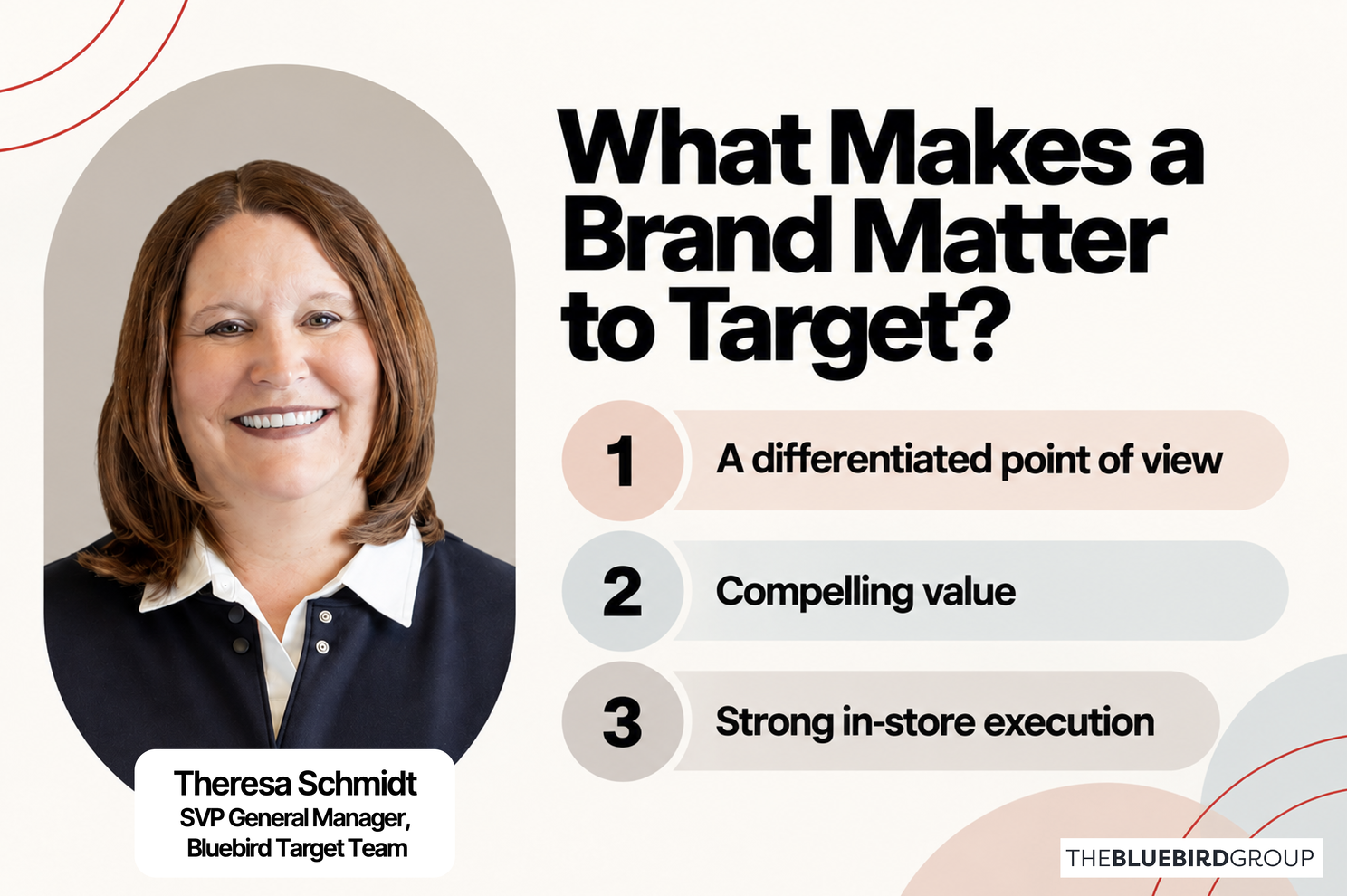
Theresa’s first principle for brands is having a differentiated point of view.
“The strongest brands give guests a reason to choose them rather than a comparable item somewhere else. They drive traffic to Target because it’s product they can’t get anywhere else.”
An assortment that looks exactly the same at every retailer gives a Target buyer very little to build around. A differentiated flavor, format, collaboration, pack size, launch window or guest experience creates a stronger reason to prioritize the brand.
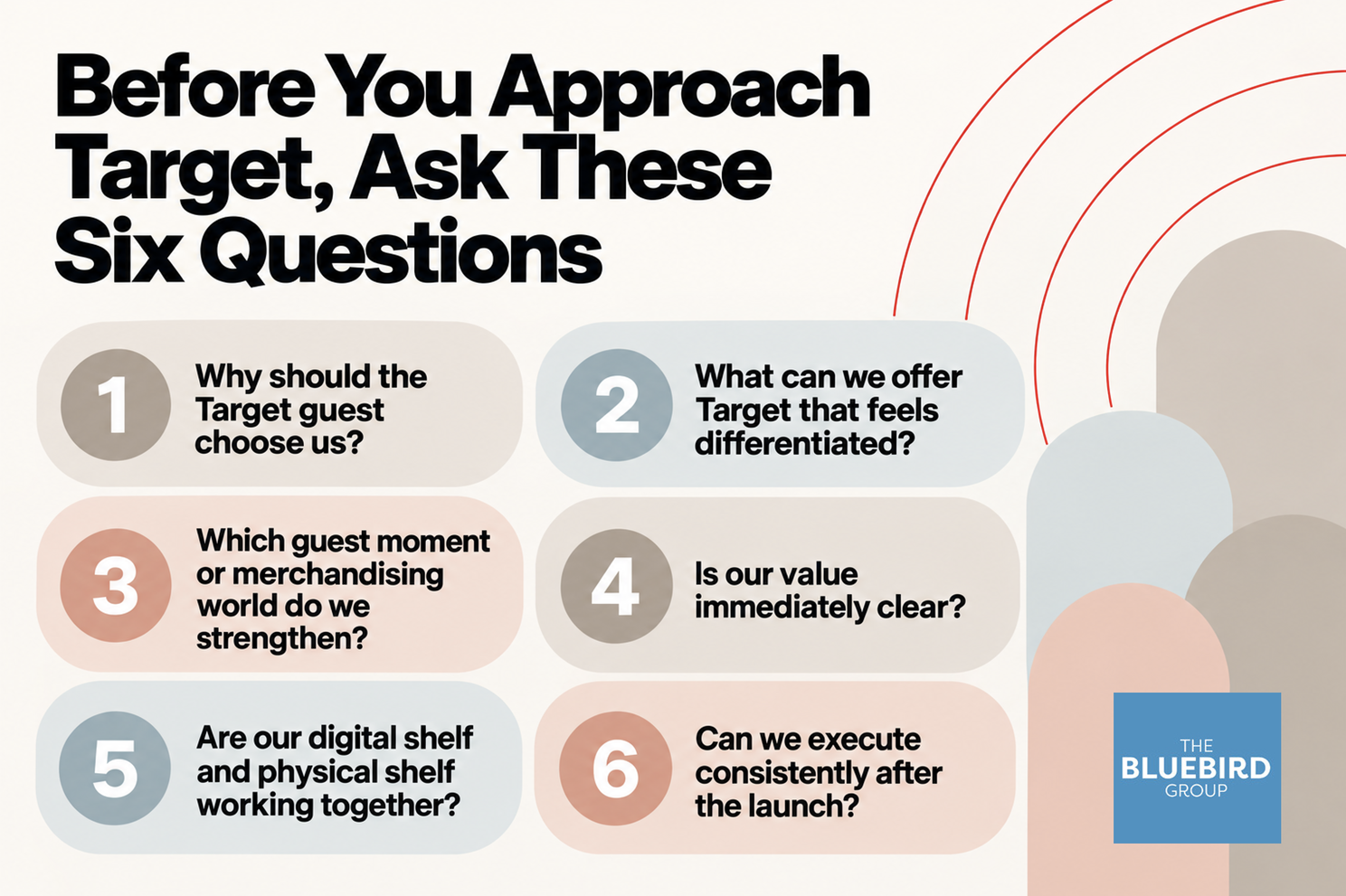
Before approaching Target, brands should be ready to answer:
- What will the Target guest find here that they cannot easily find somewhere else?
- How does this product strengthen Target’s point of view within the category?
- Could Target receive an exclusive product, early launch or distinctive value proposition?
- Which cultural, seasonal or life moment could Target own more effectively because of this partnership?
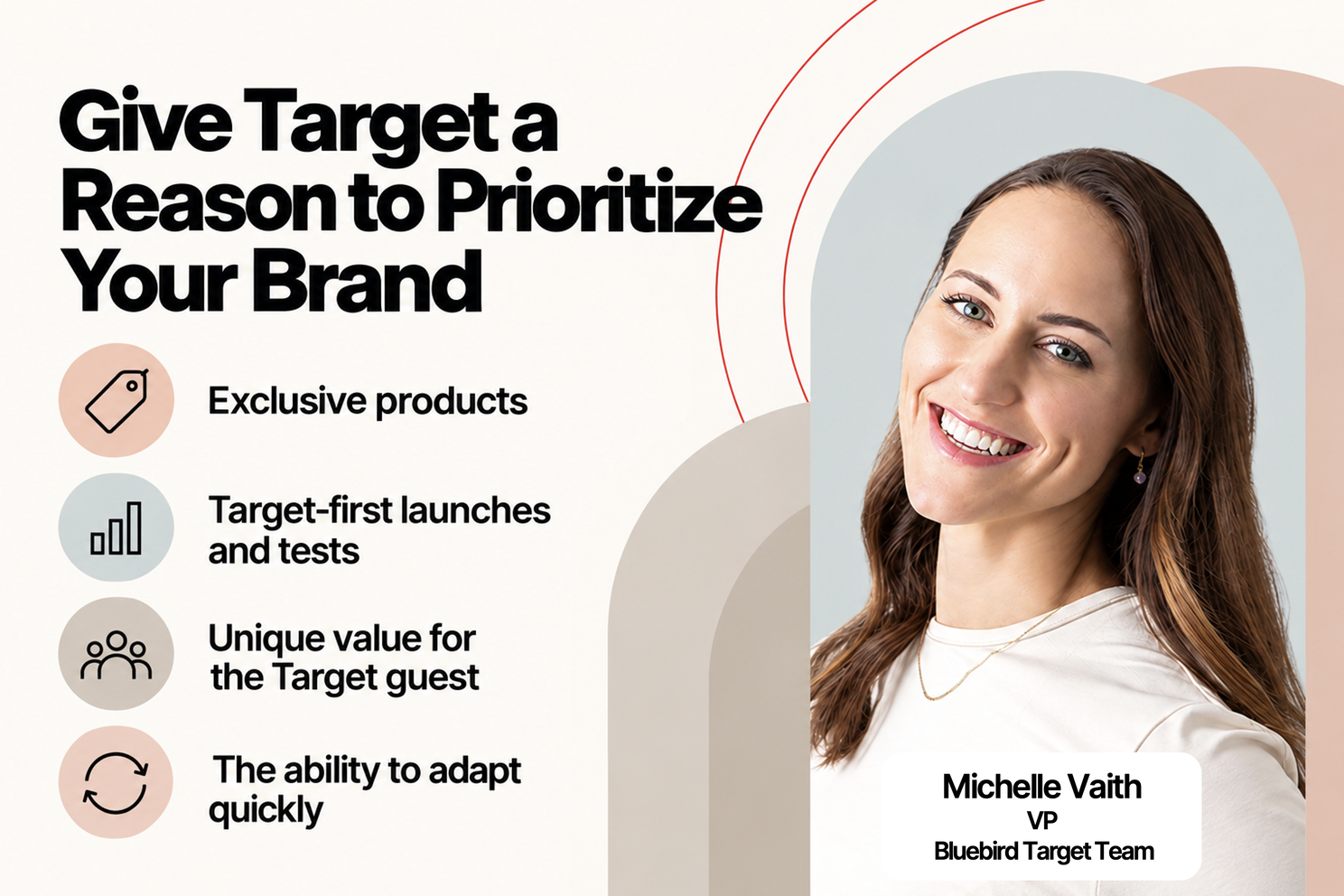
Michelle sees differentiation as a signal that the brand understands the relationship. Exclusive products, Target-first testing and unique value for the Target guest can all build credibility with the merchant team.
A strong pitch shows how the brand can help Target become more Target.
2. Think beyond your shelf and contribute to the larger world
Target’s more immersive merchandising strategy gives brands an opportunity to connect their products to broader guest needs.
A wellness brand may live in vitamins or nutrition, but its opportunity could be helping Target serve the guest looking for convenient, better-for-you solutions. A kitchenware brand could connect to a seasonal entertaining moment. A beauty product might support a complete routine, a trend or a moment of self-expression.
Michelle is seeing this happen in healthcare, where trial, convenience and multiple-benefit products are gaining importance. Shoppers are reaching for on-the-go protein, fiber, creatine and electrolytes, while the growth of GLP-1 use is influencing how some guests think about nutrition.
Alec sees a similar shift toward better-for-you ingredients and products that support healthier lifestyles. The Target guest may be willing to pay more when the benefit is clear, relevant and connected to an improvement in daily life.
Here’s the practical advice for brands: learn how your item fits into the guest’s world, then help Target merchandise and market that world more effectively.
Target’s recent category transitions/resets reinforce this direction. Target has increased newness in food and beverage, expanded health and wellness, reworked major parts of home, and invested in more immersive beauty and fandom destinations. In some areas, it is reducing SKUs to create a sharper point of view.
3. Understand what value means at Target
Price matters, especially in the current consumer environment. Target has reduced prices on more than 10,000 items over the past year as it works to strengthen its value perception. Target Q2 2026 earnings highlights
Theresa also makes a distinction: compelling value does not always mean having the lowest price.
Target’s “Expect More. Pay Less.” promise asks brands to bring value together with quality, style and design. A brand can support that promise through product performance, thoughtful packaging, accessible innovation, the right pack architecture or an exclusive offering that feels special without feeling out of reach.
Brands should arrive with a clear value story that includes pricing, assortment, promotions and the experience surrounding the product. The buyer needs to see why the guest will understand the value quickly and choose it confidently.
4. Yep, your phone is a part of the shelf
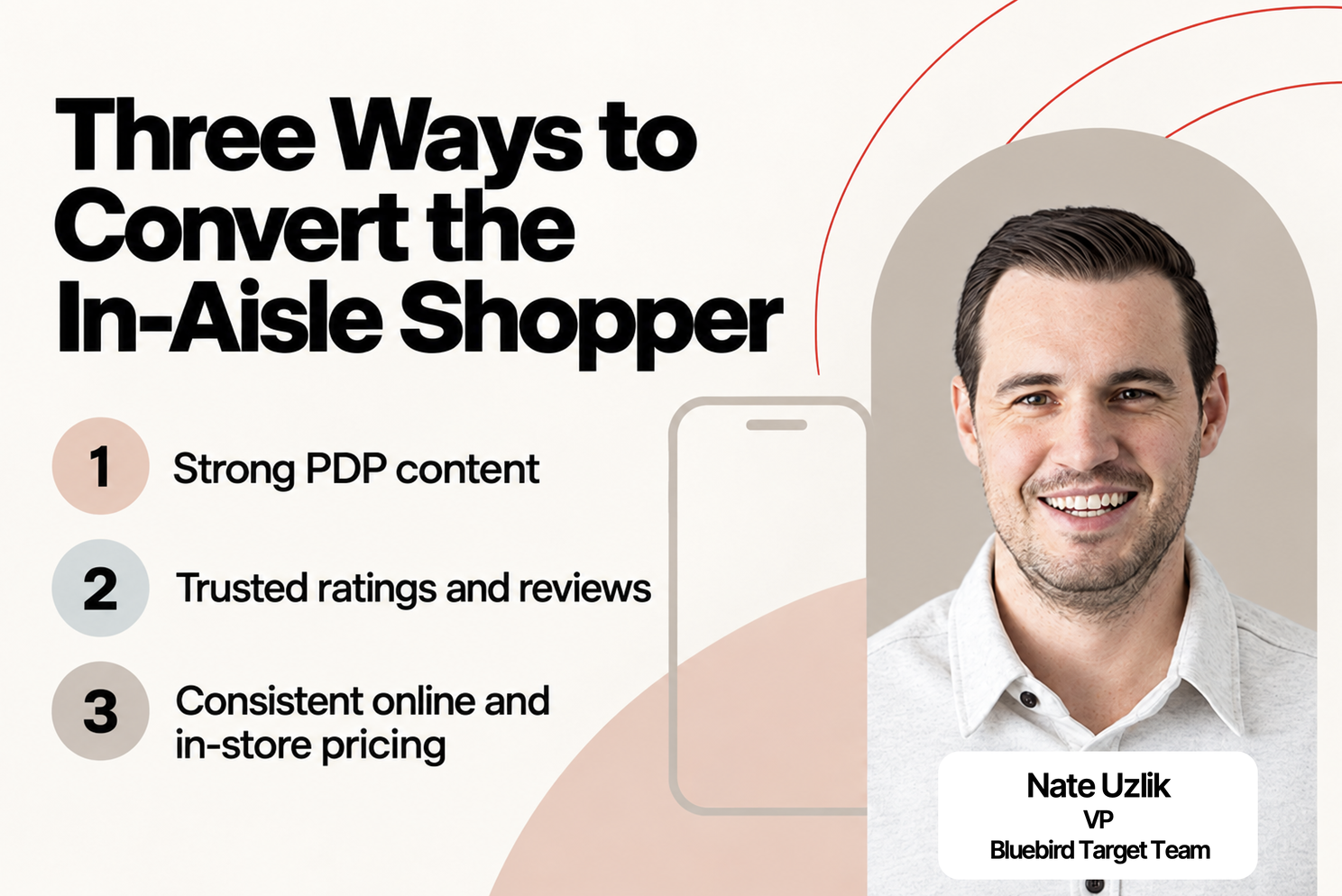
Nate describes the phone as the Target guest’s “shopping consultant.”
A guest may be standing directly in front of your product while checking Target.com for ingredients, dimensions, reviews, price comparisons, availability or a better image of what is inside the package. Physical placement and digital presentation now influence the same purchase decision.
That makes 3 basics important:
- Strong PDPs with useful imagery and clear information
- High review scores that provide trust
- Consistent pricing and product information across channels
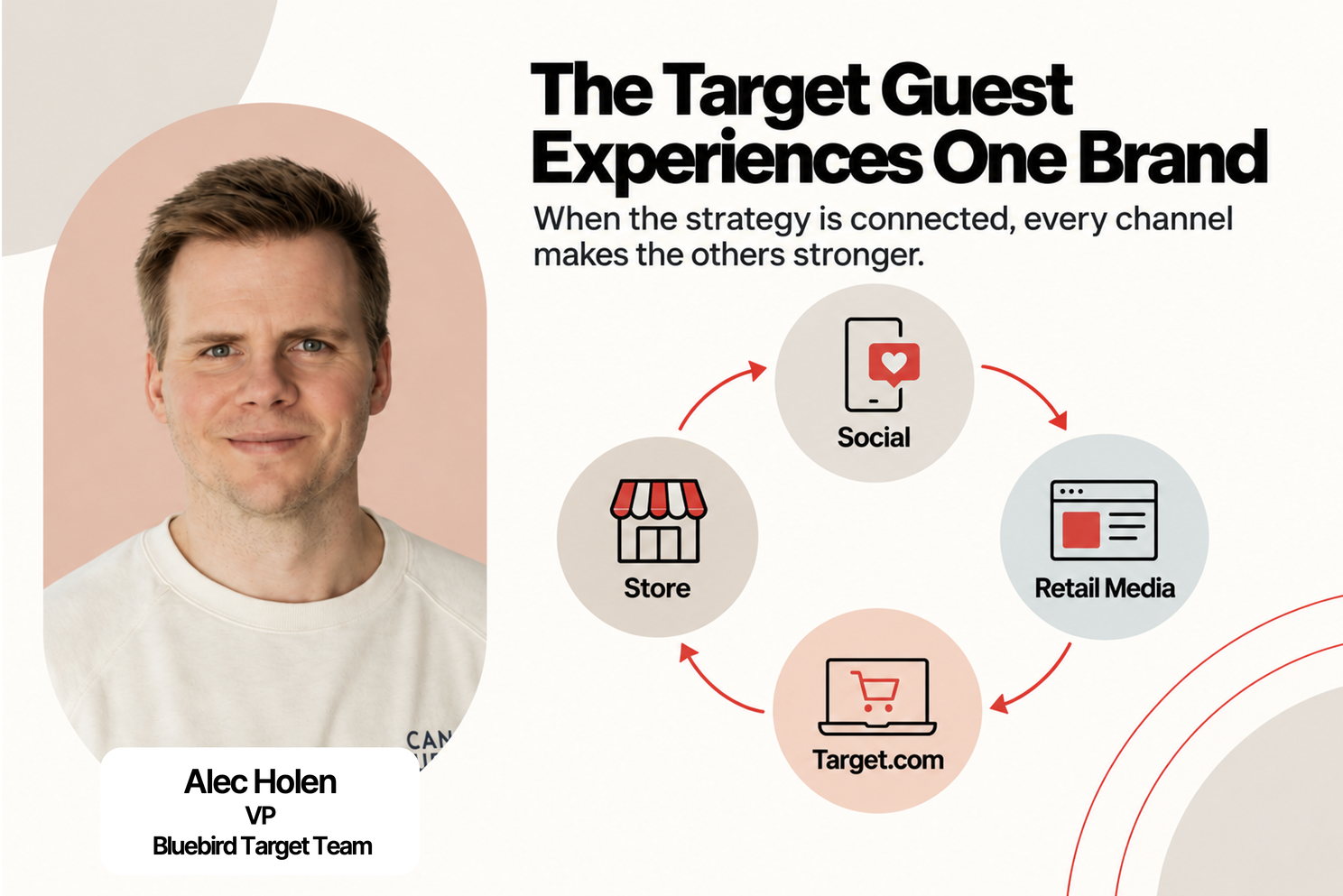
Target is investing in digital discovery, AI-powered recommendations, loyalty and personalized content while its stores remain central to both shopping and fulfillment. More than 95% of Target’s sales are fulfilled by its stores, which means the store simultaneously functions as a showroom, shopping destination and fulfillment hub.
The strongest strategy connects those investments so that social creates discovery, media captures demand, the PDP builds confidence, the store completes the experience and the brand learns from the entire journey.
5. Make operational excellence part of your growth story
You gotta nail the basics! Theresa says that presentation and inventory reliability matter immensely at Target. Michelle agrees that lasting success requires operational excellence and the ability to adapt quickly as consumer behavior, retail dynamics and competitive pressures change.
This means arriving with credible answers about forecasting, replenishment, promotional readiness and how quickly your team can respond when performance differs from the plan. It also means understanding the impact of an out-of-stock beyond one missed transaction. Bad instocks can weaken a display, lower digital conversion, compromise fulfillment and make a the merchant team less confident about giving the brand additional space.
Nailing the basics may not be as exciting than a launch campaign, but merchants remember the vendors who make their business easier to run.
6. Bring Target a learning agenda
Consumer behavior is changing too quickly for a brand to arrive with a fixed annual plan and disappear until the next line review.
Michelle puts it well: “Success at Target doesn’t happen by accident or even through a viral social moment.”
The brands that build lasting momentum continually monitor sales, search behavior, ratings and reviews, social sentiment, inventory and competitive activity. They share what they are learning, recommend what should change and give the merch buyer a reason to believe the next quarter can be stronger than the last.
A useful brand partner should be able to tell Target:
- What we expected to happen
- What the guest actually did
- What we learned
- What we recommend doing next
The merchant chair changes your perspective
When you have sat inside a retailer, you understand how many competing priorities arrive on a merchant’s desk. Every brand wants more space, more support, more media and more access. The brands that stand out make a real case for how those investments will strengthen Target’s business and serve its guest.
This is the perspective Bluebird brings to the table. Our team understands Target across apparel, home, beauty, food, healthcare, kitchenware and other categories because we have managed these decisions from multiple sides of the relationship.
We know how to translate a brand’s ambition into a Target-specific strategy, connect media with retail execution, and help teams respond when the business inevitably moves faster than the original plan.
Most importantly, we understand what it feels like to sit in the merchant chair and think, “Would I trust this team with my business?”