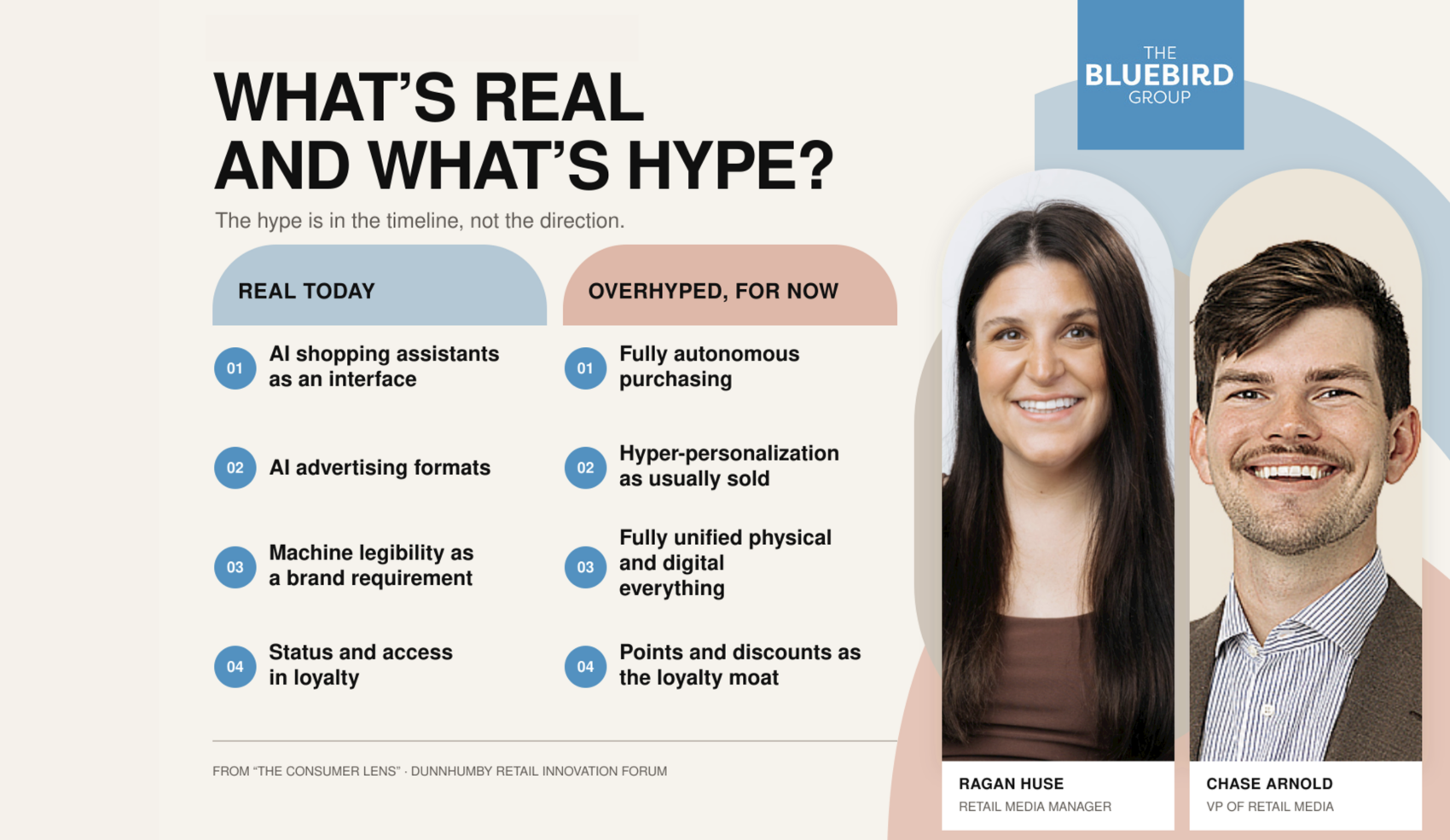
Last week, Bluebird’s Chase Arnold , VP of Retail Media, joined a group of retail leaders in Bentonville for dunnhumby ’s Retail Innovation Forum. The event brought together more than 200 people from across the retail ecosystem to talk about what is changing, what is still mostly hype, and what brands should be doing about it.
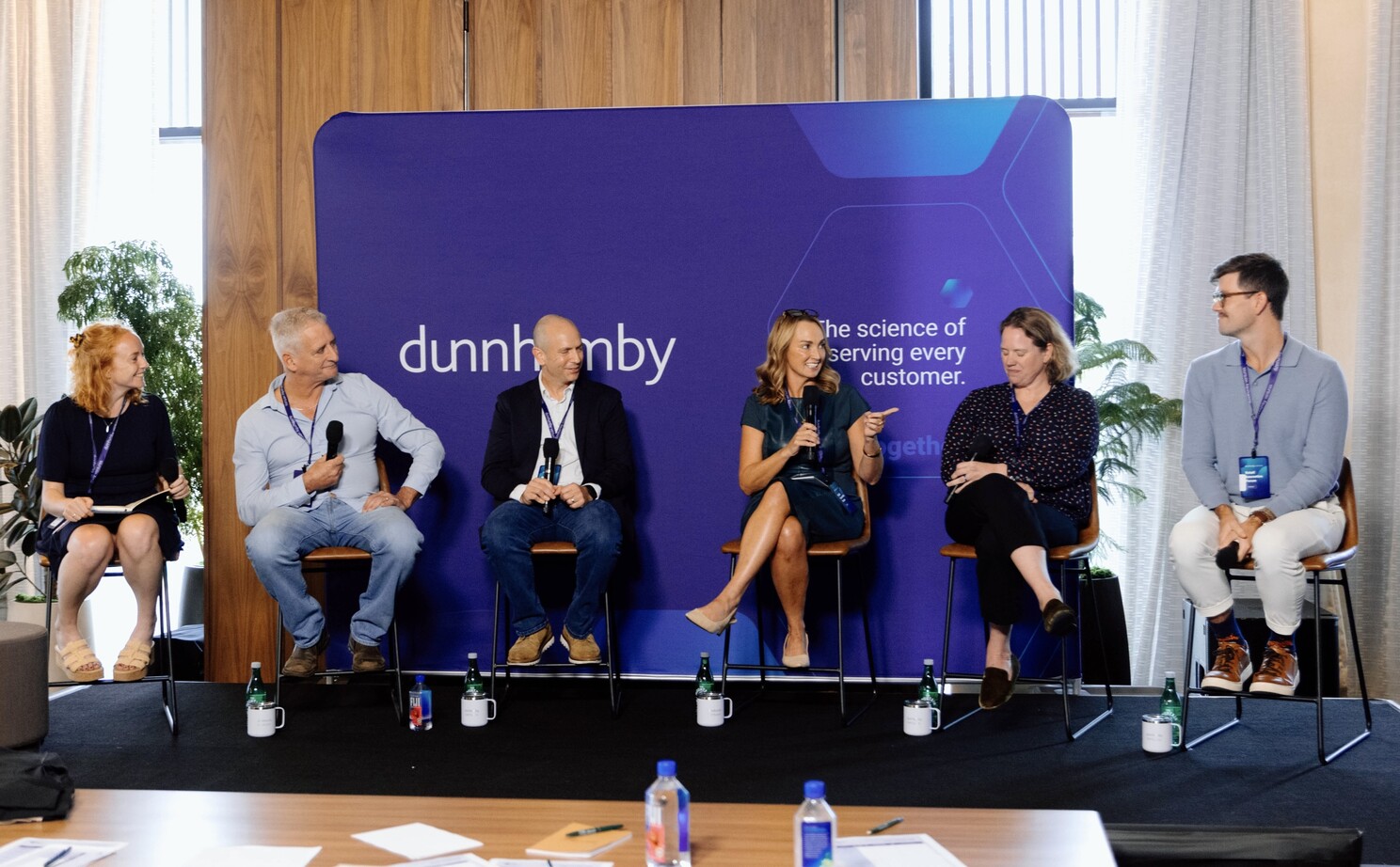
Chase spoke on a panel called “The Consumer Lens: Separating the Hype from the New Reality.” Bluebird’s Ragan Huse, Retail Media Manager, also joined him at the event. Ragan works closely with Chase and our clients, helping turn conversations like these into practical retail media decisions.
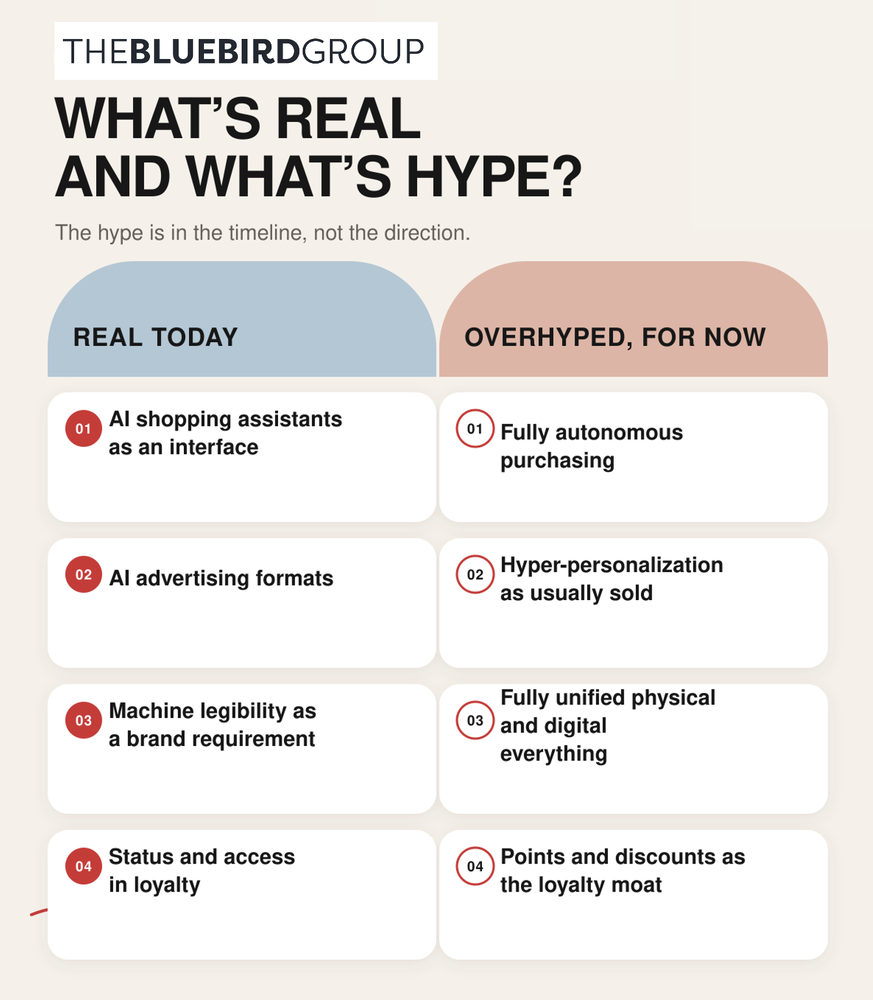
The biggest idea Chase brought back was simple: the hype is in the timeline, not the direction.
Consumers are increasingly open to letting AI handle parts of the shopping journey, but their actual behavior is still catching up. That gap is the planning window CPG brands have right now.
Millennials may lead the way
One of the more surprising data points shared during the panel came from SmartCommerce’s January 2026 research. Millennials reported being more comfortable with autonomous AI shopping than Gen Z, at 72% compared with 63%.
We tend to assume Gen Z will lead every new technology behavior, but Millennials are the ones running more households, placing weekly grocery orders, and replenishing the same products again and again.
This might be where agentic commerce shows up first. People will probably ok letting AI reorder laundry detergent, pet food, or paper towels before trusting it to buy a new television or a skincare product.
For CPG brands, the question becomes: Which products in your assortment are most likely to enter that replenishment loop first?
AI is changing consideration
The traditional shopping journey could happen over days or weeks. Someone might discover a product on social media, search for it later, compare options on a retailer’s site, read reviews, and finally make a purchase.
An AI assistant can compress that entire process into one conversation. A shopper can describe what they need, receive recommendations, compare products, ask follow-up questions, and make a decision in minutes.
Consideration used to be the part of the journey brands could influence but never truly participate in. A banner ad could introduce a product, but it could not answer a question about ingredients, explain a product benefit, or compare two options. Conversational AI can.
BCG found that shopping-related generative AI use grew by 35% during 2025. Amazon also says its Rufus shopping assistant was used by more than 300 million customers that year. This behavior is already developing, even if fully autonomous purchasing is still further away.
The shelf is becoming a shortlist
Retail media has been built around placement on a page. Brands compete to appear higher in search results, and shoppers scan through the options.
An AI assistant may recommend only 2 or 3 products. As Chase explained during the panel, “The shelf is being replaced by a shortlist and we do not have an auction for shortlists yet.”
The future advertising model is still taking shape, but brands can prepare for how these systems evaluate products. Clean up SKU data, complete attributes, accurate availability, clear product claims, and content that answers real shopper questions will become more important.
Your brand still needs to connect with people, but the system may need to understand your product before a person ever gets the chance to consider it.
What should CPG brands do now?
Start by looking at three areas:
- Make your product data easier for machines to understand. Review attributes, descriptions, claims, taxonomy, and retailer content for gaps or inconsistencies.
- Identify your most likely agentic use cases. Pay particular attention to frequently replenished products where shoppers value convenience and consistency.
- Create room to experiment. AI advertising formats deserve test-and-learn funding, but the benchmarks are still developing. Chase’s advice is to fund the test, not the forecast.
We are still pretty early which makes this a good time to learn. CPG brands can level up their foundations, join in retailer pilots, and understand how shoppers are using AI before these behaviors become harder and more expensive to influence.
Thank you to dunnhumby and moderator Ellie Brooke for inviting Bluebird into this conversation, and to Chase’s fellow panelists Jon Jacobson of Omnisient, Christina Johnson of Advisar, Mark Rose of TransUnion, and Heather Nichols of LyraConnect for sharing their perspectives.
We’re grateful that Chase and Ragan could represent Bluebird in Bentonville, learn alongside our partners, and bring these insights back to the brands we support as they prepare for agentic commerce.